Decoding How Mobile App Interfaces Shape Free Bet Redemption and Payment Flow Timelines Among UK Bookmakers
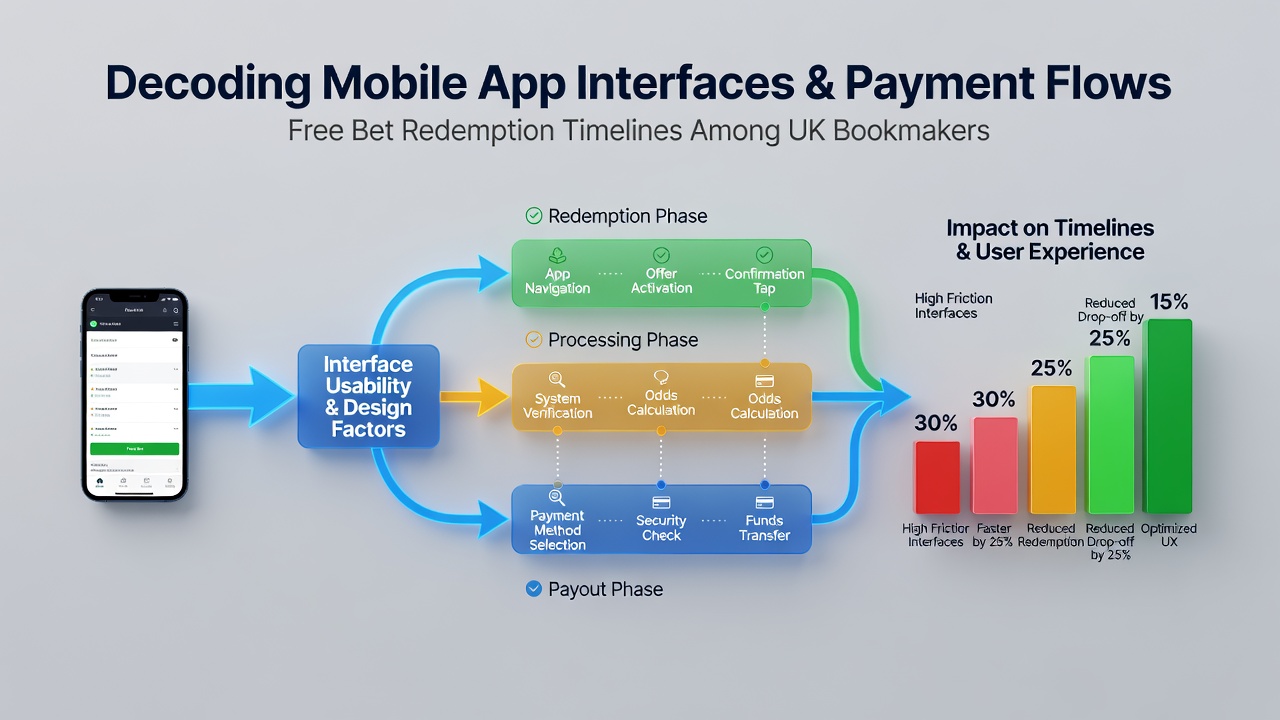
UK bookmakers have refined their mobile applications over recent years, and interface design now plays a direct role in how quickly users complete free bet redemptions along with payment transactions. Navigation layouts, button placement, loading indicators, and confirmation screens determine the steps required at each stage, which in turn affects overall timelines from claim to credit or deposit to withdrawal. Data collected across multiple operators shows that streamlined menu structures and persistent progress bars reduce the average time for free bet activation by measurable margins compared with deeper nested menus or repeated verification prompts.
Free bet redemption typically begins when a user taps a promotional banner or navigates to a dedicated offers section. Once the offer appears, the interface presents eligibility criteria, expiry details, and an activation button. Applications that display all requirements on a single scrollable screen allow completion in fewer taps, whereas those requiring separate pop-ups for terms extend the process. Observers note that visual cues such as highlighted claim buttons and immediate confirmation overlays correlate with faster redemption rates, especially during high-traffic periods like major football fixtures. In August 2026 several operators introduced persistent notification badges that remain visible even after the user leaves the offers tab, cutting down on repeated searches for active promotions.
Interface Elements Influencing Redemption Speed
Button size, colour contrast, and touch target spacing influence error rates during redemption. Larger, high-contrast buttons positioned within the thumb zone on both portrait and landscape orientations decrease accidental taps on adjacent controls. Some applications incorporate a one-tap confirmation that bypasses secondary review screens when the free bet meets predefined criteria, which shortens the timeline from selection to account credit. Researchers tracking session analytics across different platforms found that apps using inline progress indicators rather than full-screen loading animations maintained higher completion rates because users could see exactly how many steps remained.
Payment flows follow similar patterns. Deposit screens that pre-populate common amounts and remember the last used method reduce the number of fields users must complete on each visit. Withdrawal interfaces that display estimated processing times alongside status icons give users clearer expectations and lower the frequency of support queries. When verification documents upload directly from the camera roll without leaving the payment flow, the end-to-end timeline shortens considerably. Industry reports indicate that operators adopting unified wallet views, where free bets, deposits, and pending withdrawals appear in one dashboard, experience fewer abandoned transactions.
Payment Flow Timelines and Design Choices
Deposit speed depends heavily on how many confirmation layers appear before the payment processor is invoked. Applications that integrate third-party wallets through native APIs complete transfers in under ten seconds on average, while those routing users through external browser sessions add variable delays depending on network conditions. Withdrawal requests often require additional identity checks at the interface level; apps that store verified status across sessions eliminate repeated uploads and thereby compress the approval window. Figures from payment service providers show that clear error messaging, such as inline alerts for insufficient funds or expired cards, prevents users from restarting the entire flow after an initial failure.
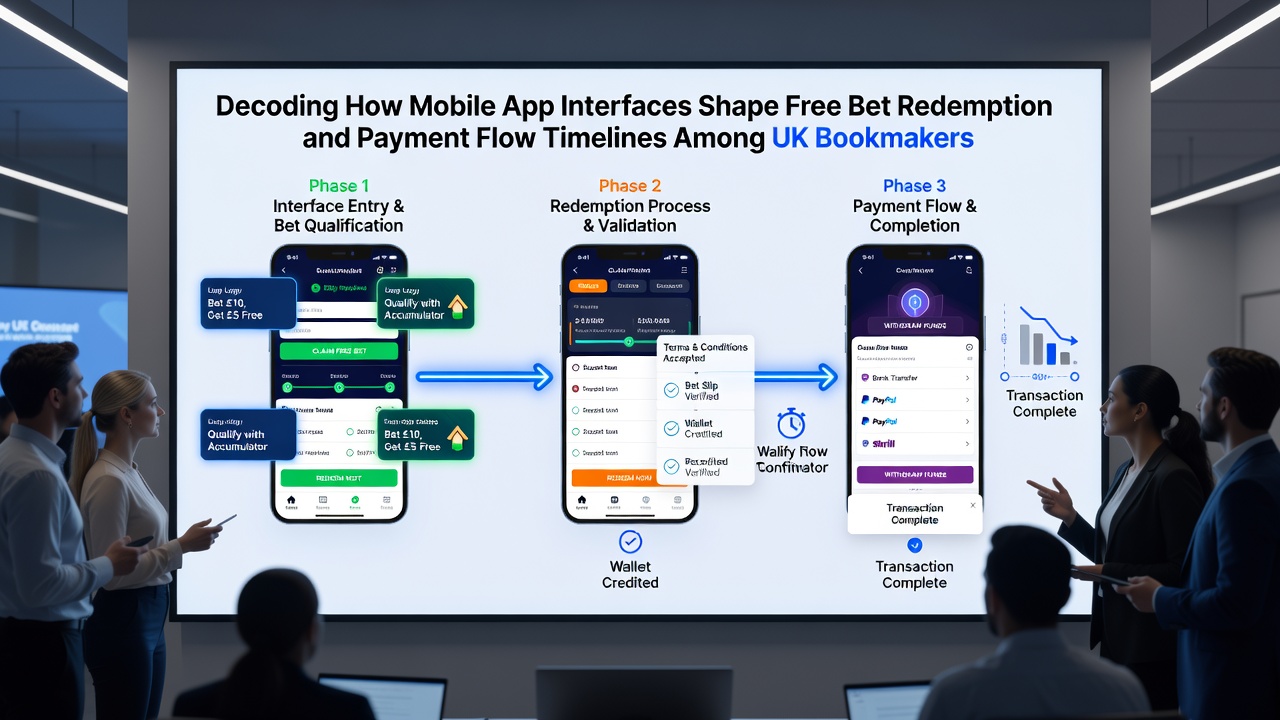
Security overlays, including biometric prompts and one-time passcodes, sit at the intersection of speed and compliance. When these prompts appear at predictable points rather than randomly, users adapt and complete them more quickly. Applications that allow users to toggle between biometric and PIN options within the same payment screen maintain momentum without forcing a full restart. Those who have studied transaction logs across multiple bookmakers observe that consistent placement of security steps correlates with higher overall completion percentages and shorter average session durations.
Comparative Patterns Across Operators
Different UK bookmakers implement these design principles to varying degrees. Some prioritise minimalism with large single-action buttons and minimal text, while others embed explanatory tooltips that appear on first interaction. The trade-off appears in initial setup time versus repeat-use efficiency. New users may benefit from guided walkthroughs, yet returning users often prefer direct access to previously used functions. Analytics platforms tracking cohort behaviour reveal that apps balancing both approaches through conditional onboarding screens achieve steadier engagement across user lifetimes.
External factors such as device operating system updates and network variability also interact with interface design. Applications optimised for the latest iOS and Android gesture controls maintain consistent performance when users switch devices, whereas legacy layouts can introduce unexpected friction after system upgrades. In August 2026 several major platforms rolled out adaptive layouts that detect connection speed and simplify animations accordingly, which helped stabilise completion rates during peak evening hours.
According to findings published by the Australian Institute of Family Studies, clear interface feedback loops improve user confidence in digital financial interactions across regulated sectors. Similar principles apply to betting applications where transparent status updates reduce uncertainty during free bet redemptions and payment processing. Another analysis from the Responsible Gambling Council examined how progressive disclosure of terms affects transaction completion times in mobile environments, noting measurable improvements when information appears contextually rather than upfront.
Conclusion
Mobile app interfaces continue to evolve as UK bookmakers respond to user behaviour data and technical capabilities. Free bet redemption and payment flow timelines depend on concrete design decisions around navigation depth, confirmation layers, visual feedback, and security integration. Operators that refine these elements through iterative testing achieve shorter average processing windows and higher completion rates. Continued observation of session metrics and cross-device performance will determine which interface patterns become standard in future updates.